
Glutamine is the most abundant amino acid in blood, reflective of the role of glutamine in both nitrogen and carbon metabolism. Glutamine is used for glutathione and amino acid biosynthesis, provides carbons for the tricarboxylic acid (TCA) cycle for intermediary metabolism and energy production, and nitrogen for the urea cycle. The liver is a central location for glutamine metabolism, as both the urea cycle and gluconeogenesis occur here, contributing to ammonia detoxification and maintenance of blood glucose levels. Thus, many cancers become dependent or “addicted” to glutamine, making glutamine metabolism a sought-after therapeutic target.
Glutamine is imported into the cell by solute carrier proteins (SLCs), where glutamine is consumed both the cytoplasm and mitochondria by glutaminase. Glutamine is synthesized by glutamine synthetase from glutamine and ammonia, primarily in the cytoplasm. Through subcellular compartmentalization of glutamine metabolism, the cell can respond to metabolic need.
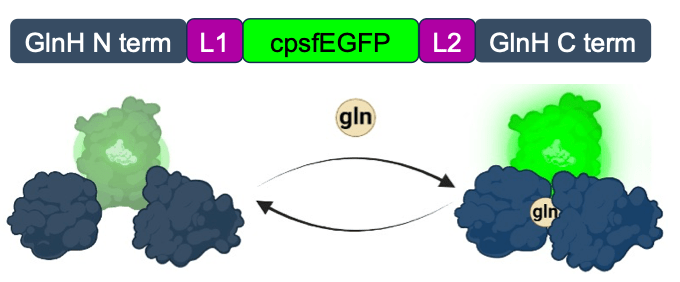
To better study the subcellular dynamics of glutamine, we have developed a glutamine optical reporter (iGlo). We used protein engineering and directed evolution approaches to develop iGlo, which consists of a bacterially-derived glutamine binding domain GlnH with circularly permutated superfolder green fluorescent protein inserted into a flexible region of the protein. Binding of glutamine induces a conformational change in the biosensor that increases fluorescence of iGlo.
We used iGlo to study the compartmentalized use of glutamine in multiple cancer cell lines, uncovering compartment- and cell-type specific differences in glutamine use. Additionally, we co-imaged iGlo with a red lactate biosensor, and uncovered the temporal dynamics of the crosstalk between glutamine and glucose metabolism. With iGlo, we can launch new investigations into the dynamic and compartment-specific use of this important amino acid. You can read more about iGlo here.


Leave a Reply